
Queertopia: In conversation with the founder of Macao International Queer Film Festival
Against all odds, this self-funded festival is now in its fourth year, bringing global queer stories to the small city of Macau

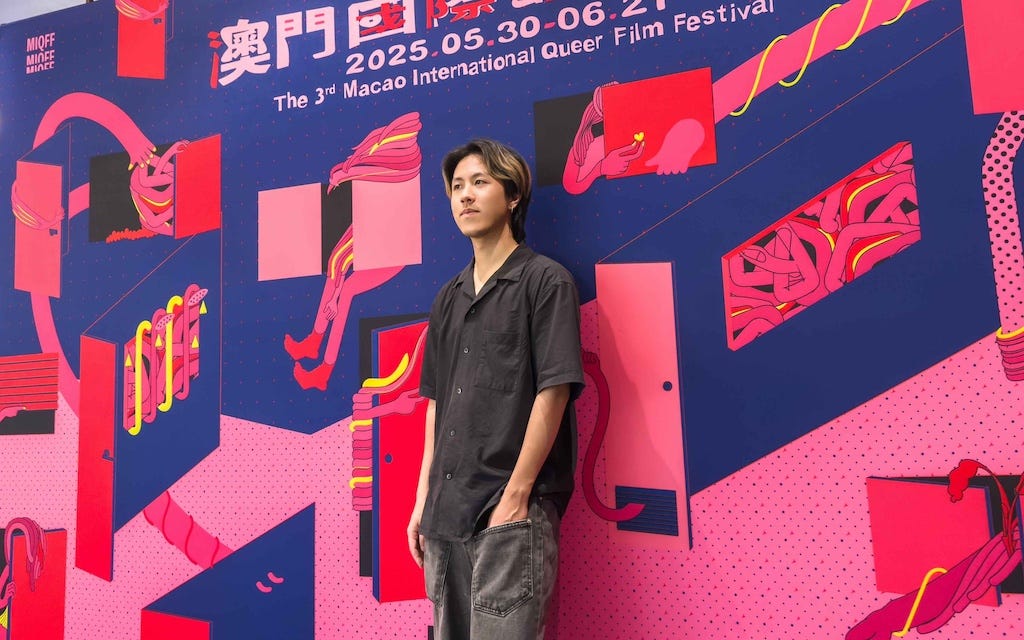
As the founder of Macao International Queer Film Festival (MIQFF), Jay Sun is an important figure in Macau’s LGBTQ+ community. Against all odds, this self-funded festival is now in its fourth year, radically bringing queer stories across the globe to cinemas in this small, post-colonial city in southern China.
Unlike its sister SAR Hong Kong, where queer bars, drag queens, and Pride Month celebrations are loud and proud, Macau’s own queer community is, in Sun’s own words, “slow-burning” – very low profile but passionate. “I hope the film festival can be a way to affirm your own identity,” says Sun.
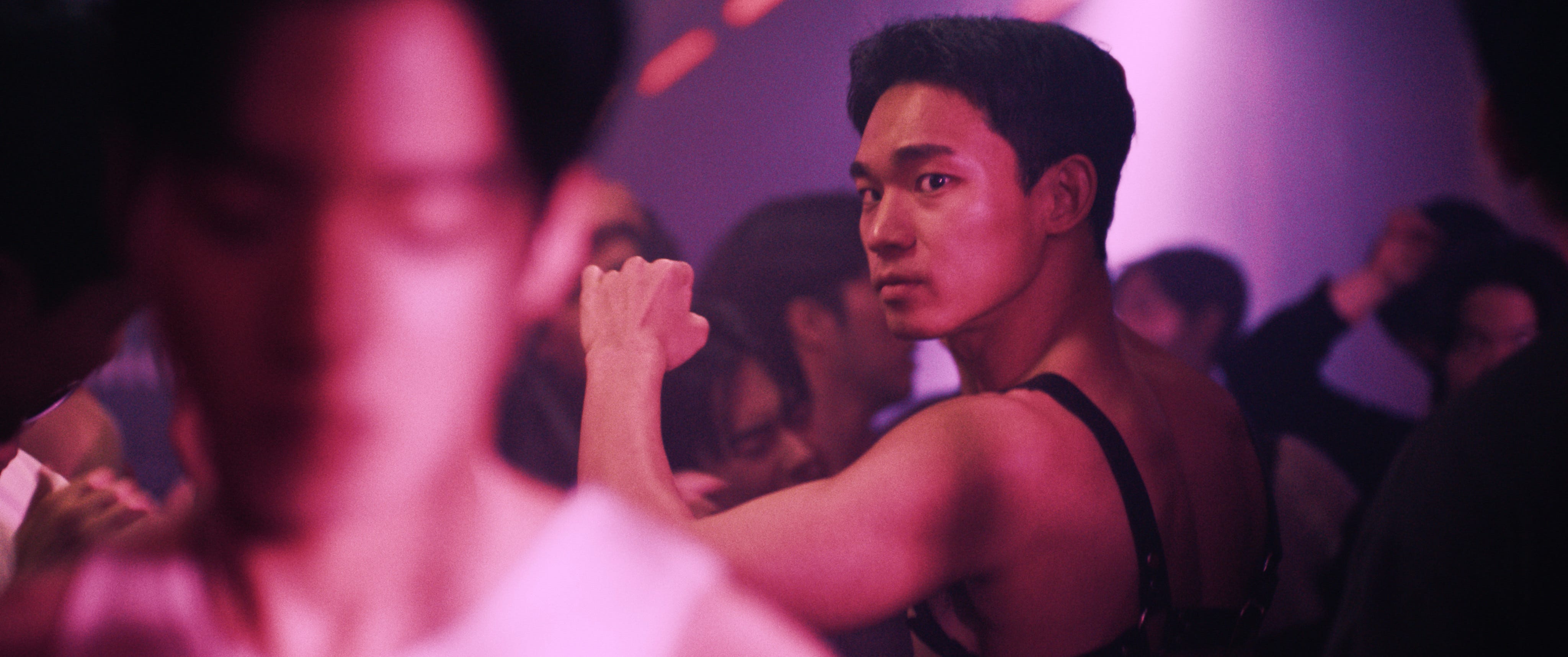
Read on to find out the meaning behind this year’s theme, the reasons behind selecting controversial Cyclone (2026) as the opening film, and whether Sun thinks local attitudes towards the queer community have changed since starting MIQFF.
The 4th Macao International Queer Film Festival runs from 5 to 27 June.
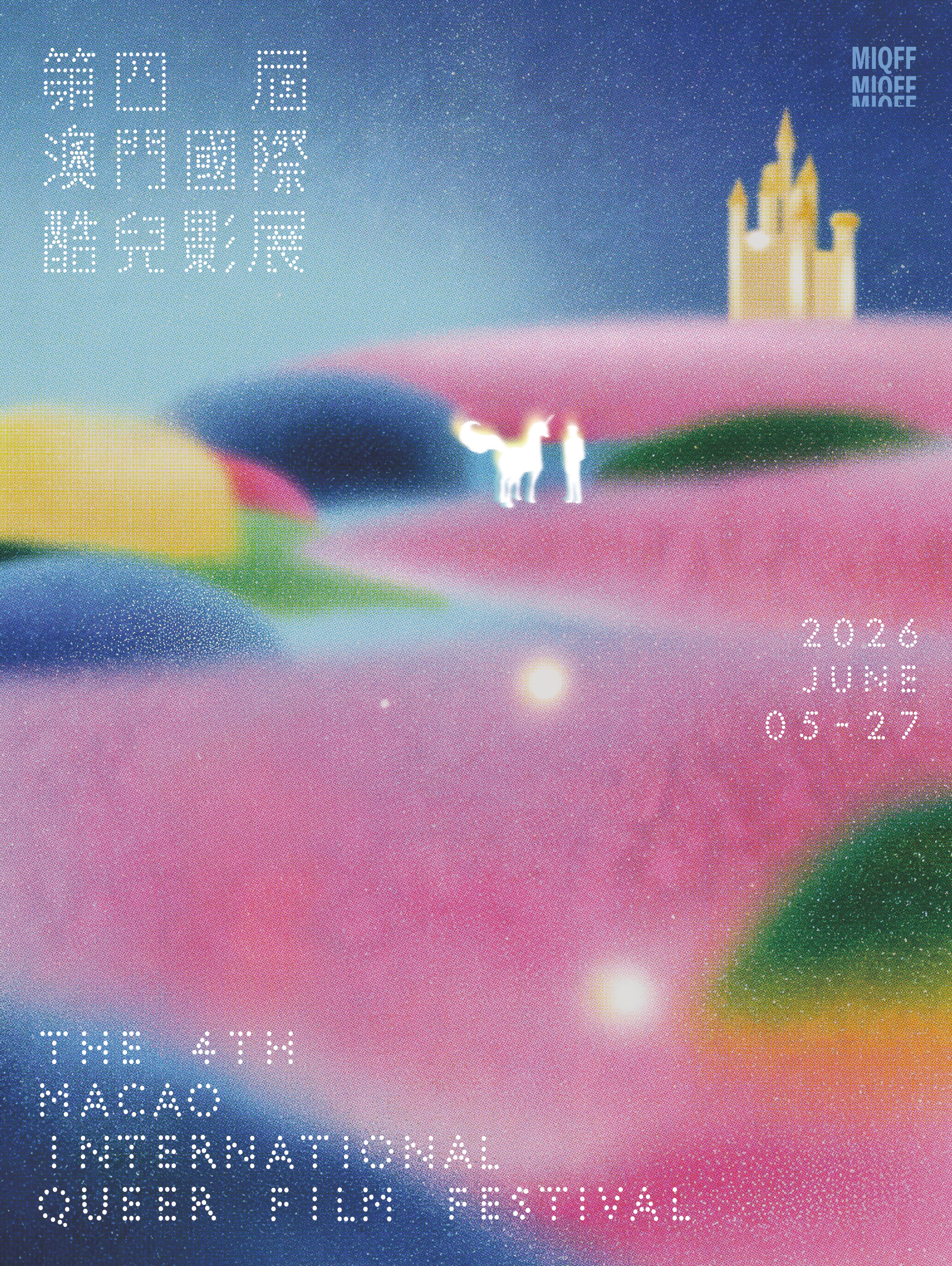
Please tell us about this year’s theme “QUEERTOPIA!/?”
On the event poster, there’s a distant, golden building that looks like a castle. In the middle there is a non-gendered figure and a unicorn. Queertopia!/? is an invitation to the audience to consider where we are now, as Macau. What are we pursuing? Is it something very distant, an ideal far away from us? Some countries have already legalised same-sex marriage, or progressed much further on gender issues, so how do we position ourselves? Should we chase something far away or should we focus on our current situation here and now, which is our most immediate and basic living condition – simply not being oppressed?
This is why Queertopia!/? has an exclamation mark and a question mark, which is deliberately ambiguous. MIQFF is not here to provide an answer to what queertopia is – we leave that up to the audience.

Why did you choose Cyclone (HK) as the opening film?
Since our third edition, we’ve aimed to choose an Asian or Chinese-language film from across Hong Kong, Taiwan, and China to be our opening film. As a self-funded festival, our budget is quite small and resources are limited, so being able to invite guests from Asia or Chinese-speaking regions simply means the budget is easier to control.
Cyclone is a bit controversial because the director Philip Yung is a heterosexual man. A straight man telling a queer story has raised some eyebrows, but the director knows he has this kind of limitation. He actually did a lot of research and found a transgender screenwriter to work on this project with him. So I feel that if you really want to know more about transgender issues in our region – because films about transgender people are quite rare here – you should check out the film.
MIQFF is also hosting a queer book club and promoting a zine launch. What can you tell us about these events?
In terms of the queer book club, we really wanted to have a space for everyone to get together – not necessarily just for reading, but to exchange ideas. So this time we chose the reading club format to invite people to bring books, exchange reading lists, and share their favourite indie publications. We haven’t done anything like this before, so I particularly wanted to try it this time.
As for the zine, MIQFF is acting as a channel to promote the pre-order and launch of the 853G zine created by Jerry Choi and Wilson So. Jerry is my friend and co-worker who loves photography. He’s been wanting to publish this zine for a long time, and has been doing interviews to encapsulate queer life in Macau.
MIQFF remains a self-funded festival. Has sourcing funding become easier as the years have passed, or is it still a challenge?
Finding funding has always been very difficult. We haven’t got much funding this year, actually. Lush1 has continued to support us. Consulates and institutions have been our regular partners, while smaller entities like private companies, restaurants, or wine companies have also chipped in. So it’s a collection of small supports that add up.
Of course, we treasure any form of funding, whether big or small. As the curator, I have the responsibility to find more sources of funding, but it’s still a work in progress. We’ll keep working hard to find and secure larger sources of funding.

Do you think local attitudes towards the queer community have changed since you started MIQFF in 2023?
When I started MIQFF in 2023, I genuinely just wanted to create a space for everyone. Of course, I had many optimistic ideas. But the purest motivation was to create a safe space for everyone to celebrate.
I’ve always believed in the magical powers of film. I also really believe that telling diverse stories through film can change – well, maybe not completely change – people’s existing perceptions. At the very least, they’ll know that there are many different facets in the world, and so many different stories co-existing with each other. As for whether local people’s views have changed – I can’t be sure. However, I’ve noticed there are sometimes still discriminatory comments when people post about queer topics on Threads.
I hope the film festival can be a way to affirm your own identity. Everyone can take part in Pride Month to meet different people, watch films, discuss and learn about each other’s lives, and realise that there’s a community of people like you in Macau.
If you want to find out more about Jay Sun, feel free to check out the profile I did on him last year for Macao News.
British cosmetics retailer